Risk Management for Businesses: Importance, Benefits, and How BoldTarget Delivers Expert Risk Solutions
In today’s volatile and fast-changing business environment, Risk Management has become a strategic necessity rather than an optional administrative function. Companies—whether small startups or large enterprises—face a wide range of risks including financial uncertainty, operational disruptions, regulatory changes, cyber threats, market volatility, and reputational damage. Effective risk management enables organizations to anticipate potential threats, minimize losses, and make confident, informed decisions.
In Saudi Arabia, where economic expansion, mega projects, regulatory reforms, and Vision 2030 initiatives are reshaping the business landscape, structured risk management frameworks are essential. Leading companies now rely on professional risk consultants such as BoldTarget, which provides comprehensive risk management services through experienced consultants and industry experts.
This article explains what risk management is, its importance for small and large companies, how risk management plans are developed, and how BoldTarget supports organizations with professional risk management solutions.
What Is Risk Management?
Risk management is a systematic process of identifying, analyzing, evaluating, treating, and monitoring risks that may negatively impact an organization’s objectives. These risks can be strategic, financial, operational, legal, technological, or reputational.
The goal of risk management is not to eliminate risk entirely—because risk is inherent in business—but to control and manage risk in a way that supports sustainable growth and long-term stability.
Why Risk Management Is Important for Companies
1. Protects Business Continuity
Risk management helps organizations prepare for unexpected events such as supply chain disruptions, system failures, or economic downturns—ensuring continuity of operations.
2. Improves Decision-Making
When risks are clearly identified and measured, management can make strategic decisions based on data rather than assumptions.
3. Reduces Financial Losses
Early risk identification reduces costly surprises, penalties, operational downtime, and reputational damage.
4. Enhances Regulatory Compliance
In Saudi Arabia, companies must comply with various regulatory frameworks. Risk management ensures compliance and reduces legal exposure.
5. Builds Stakeholder Confidence
Investors, banks, partners, and regulators trust companies that demonstrate strong governance and risk controls.
Benefits of Risk Management for Small Businesses
Small businesses often operate with limited resources, making them more vulnerable to unexpected risks. Risk management helps small companies by:
-
Preventing cash flow crises
-
Reducing dependency on single suppliers or clients
-
Preparing for market and demand fluctuations
-
Improving survival rates and scalability
For startups and SMEs, risk management creates a structured foundation that supports growth and investor confidence.
Benefits of Risk Management for Large Enterprises
Large organizations face complex and interconnected risks. Risk management enables enterprises to:
-
Manage operational complexity across departments
-
Protect brand reputation and market position
-
Support large-scale investments and projects
-
Align risk appetite with corporate strategy
Enterprise Risk Management (ERM) frameworks are especially critical for companies involved in government contracts, infrastructure projects, or regulated industries.
Types of Business Risks
Professional risk management frameworks typically address the following risk categories:
Strategic Risks
Related to business strategy, competition, market changes, and investment decisions.
Financial Risks
Including liquidity risk, credit risk, currency exposure, and cost overruns.
Operational Risks
Such as system failures, supply chain disruptions, human error, and process inefficiencies.
Compliance & Legal Risks
Associated with regulatory requirements, contracts, and legal obligations.
Technology & Cyber Risks
Including data breaches, system downtime, and digital security threats.
Reputational Risks
Related to brand image, customer trust, and public perception.
How to Prepare a Risk Management Plan
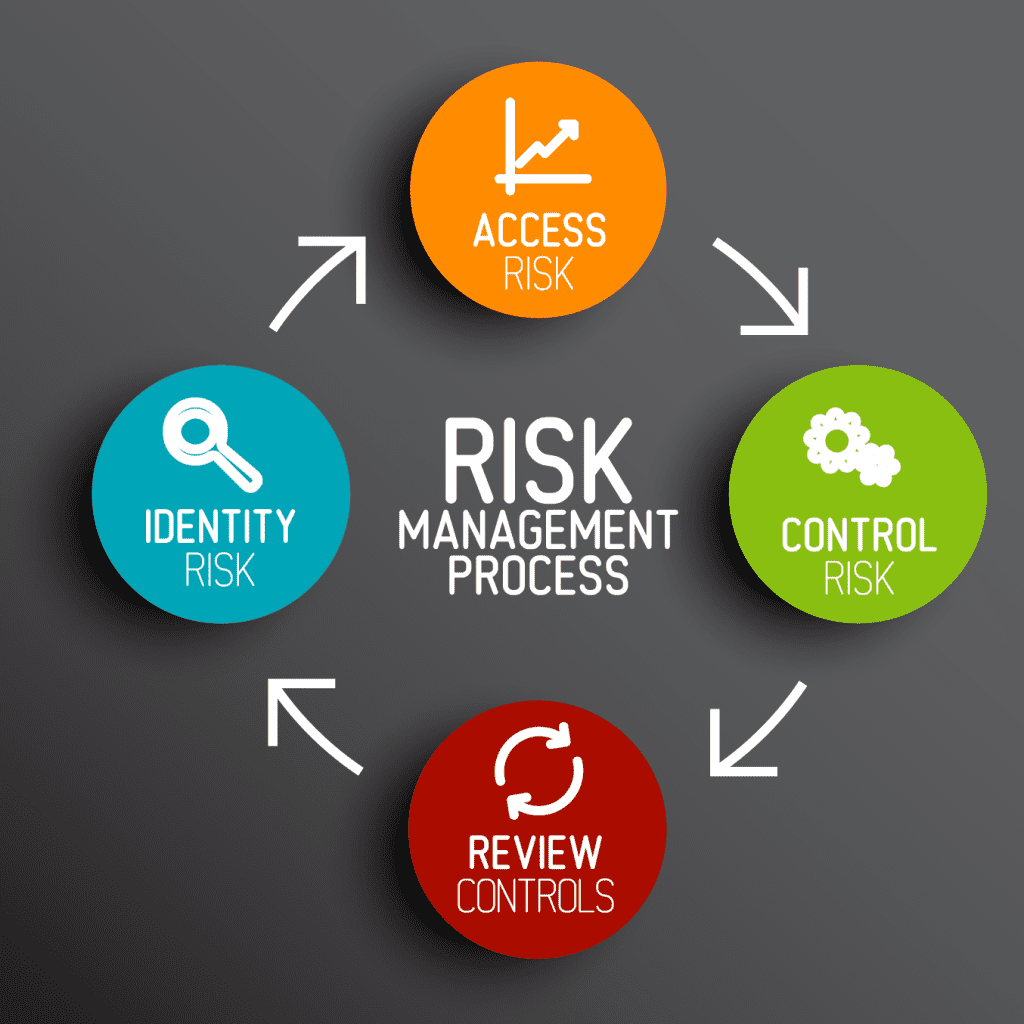
A professional risk management plan follows a structured methodology. Below is a step-by-step overview commonly used by expert consultants such as BoldTarget.
Step 1: Risk Identification
Identify all potential risks that could impact the organization. This is done through:
-
Workshops and interviews
-
Process reviews
-
Historical data analysis
Example: A construction company identifies risks such as material price fluctuations and project delays.
Step 2: Risk Analysis
Each risk is analyzed based on:
-
Probability of occurrence
-
Potential impact on cost, time, quality, or reputation
Risks are often ranked using risk matrices or scoring models.
Step 3: Risk Evaluation
Risks are prioritized to determine which require immediate action and which can be monitored.
Step 4: Risk Mitigation & Treatment
Develop strategies to manage risks, including:
-
Risk avoidance
-
Risk reduction
-
Risk transfer (insurance, contracts)
-
Risk acceptance
Example: A logistics company mitigates delivery risks by diversifying suppliers and routes.
Step 5: Monitoring & Review
Risk management is an ongoing process. Risks must be reviewed regularly, especially when business conditions change.
Risk Management Examples
Example 1: SME Retail Business
Risk: Seasonal demand fluctuation
Solution: Inventory planning, flexible staffing, diversified product mix
Example 2: Large Construction Company
Risk: Project delays and cost overruns
Solution: Contractual risk allocation, contingency planning, supplier evaluation
Example 3: Technology Company
Risk: Cybersecurity threats
Solution: Data protection controls, system backups, incident response planning
BoldTarget’s Risk Management Services
BoldTarget provides professional risk management consulting services for companies across Saudi Arabia. Its services are delivered by experienced consultants and subject-matter experts who understand local regulations, market conditions, and international best practices.
BoldTarget’s Key Risk Management Offerings
-
Enterprise Risk Management (ERM) frameworks
-
Business risk assessments and risk registers
-
Project and operational risk management
-
Financial and investment risk analysis
-
Compliance and regulatory risk assessments
-
Risk policies, procedures, and governance frameworks
BoldTarget tailors each risk management plan to the client’s size, industry, and strategic objectives.
Why Choose BoldTarget for Risk Management
Companies choose BoldTarget because it offers:
-
Experienced risk management consultants
-
Practical, business-oriented risk frameworks
-
Alignment with Saudi regulations and Vision 2030
-
Support for SMEs, enterprises, and government-related projects
-
Clear documentation and actionable recommendations
BoldTarget focuses on risk-aware decision-making, not theoretical models.
Risk Management as a Strategic Advantage
Organizations that implement effective risk management are more resilient, competitive, and attractive to investors. Risk management transforms uncertainty into a structured decision-making process—supporting sustainable growth and long-term success.
With professional guidance from BoldTarget, companies can proactively manage risks while confidently pursuing opportunities.
Conclusion
Risk management is a critical pillar of modern business strategy. From protecting small businesses against uncertainty to enabling large enterprises to manage complex operations, risk management supports stability, compliance, and growth.
With its experienced consultants and structured methodologies, BoldTarget is a trusted partner for risk management services in Saudi Arabia—helping companies identify risks, mitigate threats, and build resilient organizations.